Holding the Zones Note 6 of 7
Heat Next Door: Wine Columns Beside a Range and West Glass
- Written by
- Bjorn Aaltonen
- Bench
- wine storage and dual zones
- Years in the trade
- 15
- Refrigerant
- EPA 608 certified
A wine column, which is a wine fridge built in at full height, is often the tallest thing in a new kitchen, and designers like to line it up with the cooking range or stand it where the light falls on its glass. On Mercer Island, where west-shore kitchens look out over the lake toward the afternoon sun, that can leave a unit between a working range on one side and a bright window on the other.
None of that makes a column fail. It does change how hard the machine works, and it changes what we look at first when a zone starts slipping.
What extra heat does to the machine
A warmer kitchen keeps the compressor running longer, which is the one thing Sub-Zero’s troubleshooting does say about the air around a unit. A column beside a range sits in air that can be warmer than the rest of the kitchen whenever dinner is cooking, and its side panel takes on heat through the cabinetry. The machine answers the only way it can, with longer runs and shorter rests.
A healthy unit copes. What the extra load does is expose anything marginal. A condenser that was half blocked, a fan that has begun to slow or a door that seals imperfectly can all hide in a cool kitchen and show themselves in the first week the range runs every evening or the afternoons turn warm.
The sun on the glass
Heat is one of four things Sub-Zero names as enemies of wine, alongside humidity, vibration and light, and its wine units use UV-resistant, bronze-tinted glass to deal with the light. Shielding bottles from light is not the same as shielding them from heat. A door in full afternoon sun still takes warmth on board, and the bottles nearest the glass feel it first. The page on the glass door itself covers what that door is built to do.
The Lake Air series spends a whole note on that light, and on where the most valuable bottles should sit, in afternoon sun on a west-shore unit. Here the question is narrower: is the zone losing ground to heat from outside, or failing to get rid of its own?
Heat coming in, or heat not getting out
Two different problems produce the same complaint, and telling them apart decides what happens next.
Heat coming in keeps time with its source. The zone slips while the range is working or the sun is on the door, then recovers within a few hours once the source is gone. The column is working; it is simply losing a race.
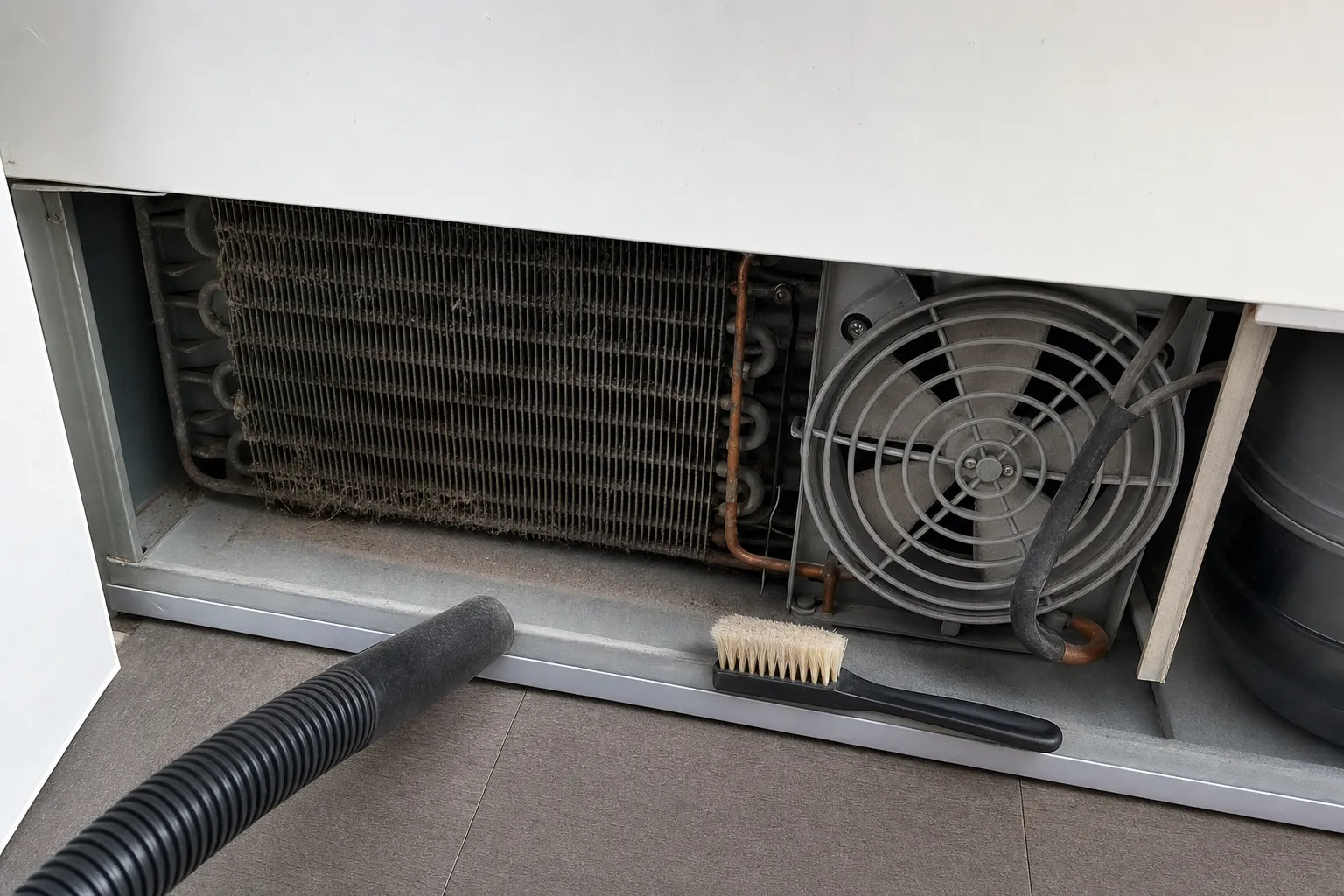
Heat not getting out keeps no timetable. On its Designer wine columns, Sub-Zero puts the condenser behind a louvered kickplate at the bottom of the unit, and its undercounter guide asks owners to keep ventilation openings in the unit and the cabinetry around it clear. When that air path is blocked or the coil is matted, the column runs warm and runs long all day, cooking or no cooking. Heat from next door makes it worse, but it is not the cause.
A day of probe readings, taken in the morning and again in the late afternoon, usually shows which of the two you have.
What you can change
Most fixes for heat coming in belong to the house rather than the machine. A blind or shade drawn in the afternoon keeps the sun off the glass. Opening the wine door less while dinner is cooking, and loading new bottles in the morning, spares the zone an extra load at the warmest hour.
If the zone that takes the afternoon sun holds the colder setting, consider swapping. Either zone can hold reds or whites, and the zone set warmer has less of a gap to defend against the heat.
Keep to Sub-Zero’s condenser schedule, which is every six to twelve months, and shorten it if pets shed near the kickplate. A column working against heat from next door needs every bit of its condenser.
When the spot itself is the problem
Sometimes the honest answer is that the column stands in a hard place. Moving it is cabinetry and installation work rather than repair, and no repair makes up for a heat source that shares its wall. What a visit can do is put the column in the best shape to cope: a clean coil, a free air path, a door that seals, and fans and sensors that test right. If a part has given way under the extra load, that is wine storage repair, with the price set after the diagnosis and the $89 visit credited against the work you approve.
Before you call
-
Step 1
Probe the zones morning and late afternoon
Leave a thermometer in a glass of water in each zone and read it early, then again after the sun or a long cooking session has been at work. Note both times.
-
Step 2
Watch where the sun falls
On a clear afternoon, note whether direct light reaches the glass door and for how long. A shade drawn for that hour is a fair test.
-
Step 3
Keep the kickplate uncovered
Make sure nothing sits across the louvered kickplate at the foot of the column: no rug, basket or trim board. The condenser is right behind it.
-
Step 4
Clean the condenser on schedule
Every six to twelve months, switch the column off, open its door and take off the kickplate as its guide shows, then, in gloves, clear the coil with a soft brush and a vacuum worked along the fins.
Past these checks the fault is inside the machine. Call Mercer Island Sub-Zero Service on (206) 208-3377 and say which step changed nothing.
Asked about this
Can a Sub-Zero wine column go right next to a wall oven?
That belongs to the unit's installation guide and your designer, and the answer depends on the models involved. What repair work shows is that heat from next door makes the compressor run longer, just as Sub-Zero notes for a warmer room, and it exposes a weak part sooner. In that spot a clean condenser and a free air path matter more.
Does the UV-resistant glass stop the sun warming the wine?
Sub-Zero's bronze-tinted glass is there to resist ultraviolet light, and light is only one of the four enemies of wine it names; heat is another. A door in direct afternoon sun still warms, so a blind or shade for those hours earns its keep. Mercer Island Sub-Zero Service, (206) 208-3377, can check whether the zone recovers once the sun moves on.
The zone slips only while we cook. Is something broken?
Probably not. A zone that drifts while the range is working and comes back within a few hours is losing ground to heat from outside rather than failing. Every cabinet moves around its setting in use. Call if the zone is still high the next morning, or if it now slips on days when nothing is cooking.