Lake Air Note 7 of 7
Docks, Decks and Boathouses: Undercounter Units Outside the Heated House
- Written by
- Bjorn Aaltonen
- Bench
- wine storage and dual zones
- Years in the trade
- 15
- Refrigerant
- EPA 608 certified
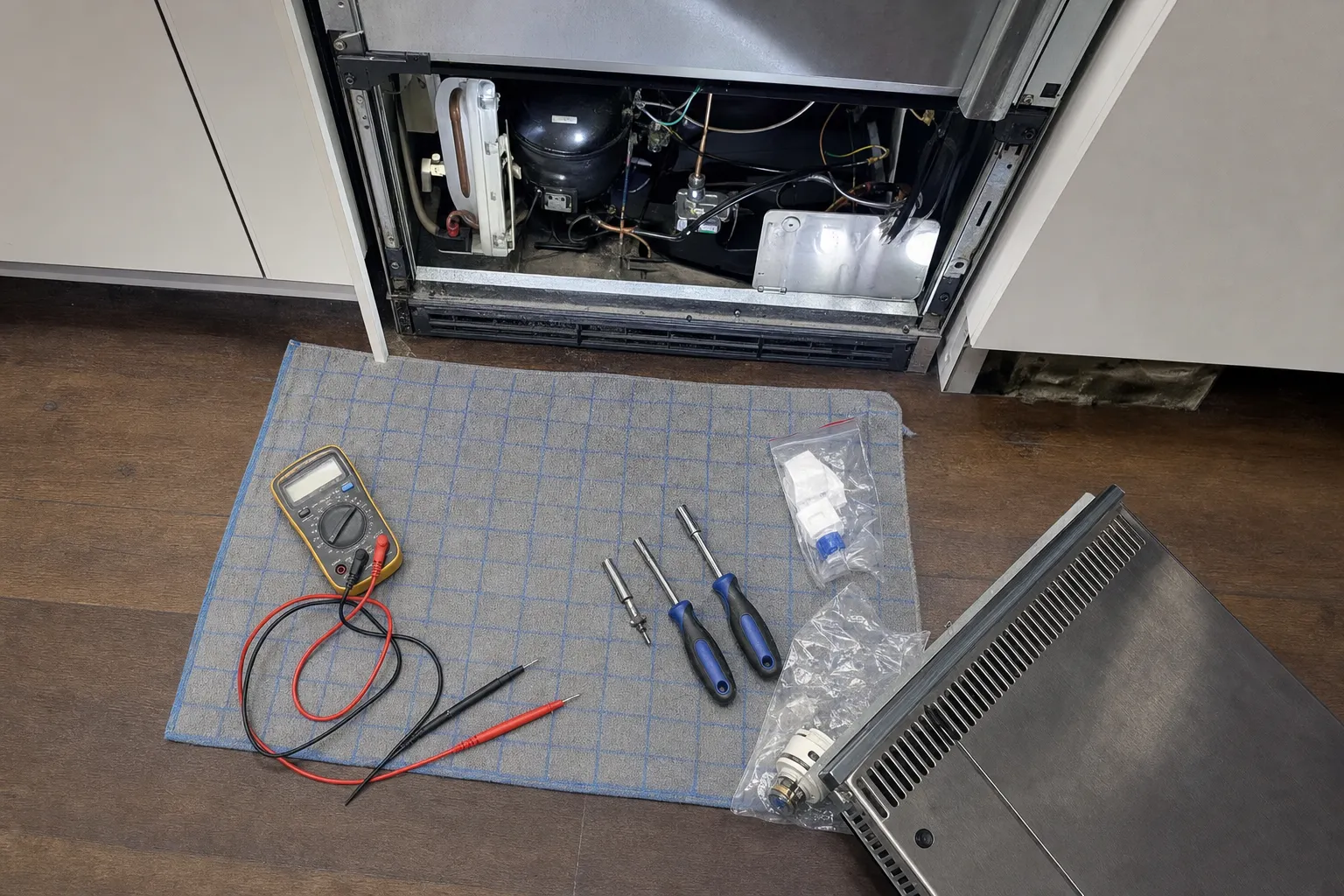
An undercounter refrigerator on a deck or in a boathouse is a different machine to own from the one in the kitchen, even when the two look identical. On Mercer Island a good deal of summer happens at the water’s edge, and the units serving those spaces live with rain, spray, damp air and a winter spent outside the heated house.
So the first question on an outdoor unit is not what has failed but what the unit is.
Outdoor-approved, or an indoor unit moved outside
Sub-Zero does make an undercounter refrigerator for outdoor use; its current Designer undercounter guide lists an outdoor all-refrigerator alongside the indoor models. Its outdoor warranty applies only to a product approved for outdoor use, and that approval is designated by model and serial number. The rating plate, which Sub-Zero’s undercounter guides place inside the cabinet, is where those two numbers are printed.
The difference matters on the day something fails. The same Designer guide that lists the outdoor model carries a plain warning not to expose the appliance to rain, and we read that as a reason for any unit outside, approved or not, to live under a roof. An indoor unit on an open deck is working beyond the setting it was sold for, and several of the faults below follow directly from that.
Whether a unit belongs outside at all is for Sub-Zero and the installer to settle. Our part is to tell you what the unit is and how it is coping.
What lakeside living does to a unit
Rain and spray. Water finds the control panel, the edge of the door and the front of the machine bay. A unit that goes dead after a storm may simply have tripped its outlet.
Damp air. Kitchen air is dried and warmed by the house. Air on a dock or in a boathouse is not, and it reaches the controls and the wiring behind the kickplate day and night.
The kickplate grille. Sub-Zero puts the condenser on its undercounter units behind the kickplate, and outdoors that grille collects leaves, spider webs, pollen and grit blown across the boards. The condenser fan pulls air through whatever has gathered there, and a clogged coil makes it work harder until it starts to fail as well.
Sun. Sub-Zero notes that warmer surroundings make the compressor run longer. A unit in full afternoon sun on a south- or west-facing deck runs longer than the same model in a shaded kitchen.
Enclosed spaces. A boathouse keeps the rain off but can trap warm air around a unit in summer and damp in winter. An undercounter unit needs free air at its grille wherever it stands.
Winter and the off-season
Owners of outdoor units usually do one of two things for the cold months: keep the unit running, or shut it down. If it stays on, look at it now and then through the winter as you would any appliance outside the heated house, and note anything unusual before spring.
If it is shut down, Sub-Zero’s vacation advice for its undercounter units fits well. The power goes off at the unit’s control panel, the cabinet is emptied, and the door is blocked a little way open so fresh air can keep the interior dry. A cabinet left shut and switched off beside the lake stays damp inside, which is exactly what that advice is there to prevent. The One Bridge note on long absences covers the same ground for units inside the house.
Before the season starts again, clean the condenser. Sub-Zero’s undercounter guides describe it as owner maintenance: power off first, gloves against the sharp fins, a soft brush and a vacuum drawn along the fins rather than across them. The UC-24 guide asks for it every three to six months, the current Designer guide every six to twelve. For a unit that lives outdoors, we would work to the shorter figure for your model.
What we check on an outdoor unit
We start with the model and serial, because they tell us what the unit was built for. Then the power: the breaker, the outlet and the cord, all checked dry. After that the machine bay behind the kickplate, for water, debris and the state of the condenser and its fan; the control panel, for signs of moisture; and the door and gasket, which age faster in sun and weather.
Only then do we move on to the cooling itself, in the same order as on any undercounter unit. The work is booked as refrigerator repair, and any part is priced after the diagnosis, before it is ordered.
Before you call
-
Step 1
Read the model and serial
Both are on the rating plate inside the cabinet. They settle whether the unit is approved for outdoor use, and they are the first thing we ask for.
-
Step 2
Check the breaker and the outlet
Outdoor outlets usually carry a test and reset button. If it has tripped and the outlet and plug are dry, reset it once. If it trips again, or anything is wet, leave it off.
-
Step 3
Clear the kickplate grille
Brush leaves, webs and grit off the grille at floor level and move anything stacked against it. Do not take panels off to reach further in.
-
Step 4
Look for water after rain
After a wet day, check the control panel, the door edge and the floor under the unit. Water inside the door or around the base is worth a call.
-
Step 5
Plan the off-season
If the unit will stand unused through the winter, power it down from its own control panel, take everything out, and prop the door a little open so the cabinet can dry.
Past these checks the fault is inside the machine. Call Mercer Island Sub-Zero Service on (206) 208-3377 and say which step changed nothing.
Asked about this
How can I tell whether our deck unit is an outdoor model?
Read the model and serial from the rating plate inside the cabinet. Sub-Zero ties outdoor approval to those two numbers, and its outdoor warranty applies only to units approved that way. If your paperwork does not settle it, Sub-Zero's customer care is the place to ask, and Mercer Island Sub-Zero Service will want both numbers when you call (206) 208-3377.
Is the warranty the same on an outdoor unit?
Not quite. Sub-Zero's outdoor limited warranty gives one year of full parts and labor coverage, against two years on its indoor residential units, plus five years of full coverage on the sealed system. The indoor warranty's further limited sealed-system term, out to twelve years, is not part of the outdoor one. Work under either warranty is done by service Sub-Zero appoints.
Can an indoor undercounter unit stay on a covered deck?
That is a question for Sub-Zero and for whoever installed it, and not one we can settle on the phone. What we can say is that Sub-Zero's current undercounter guide warns against exposing the appliance to rain, and that an indoor unit outside is working beyond the setting it was sold for. We repair units where they stand; we do not install or relocate them.