Lake Air Note 4 of 7
How a Glass-Door Gasket Fails, and What It Does to the Zones
- Written by
- Bjorn Aaltonen
- Bench
- wine storage and dual zones
- Years in the trade
- 15
- Refrigerant
- EPA 608 certified
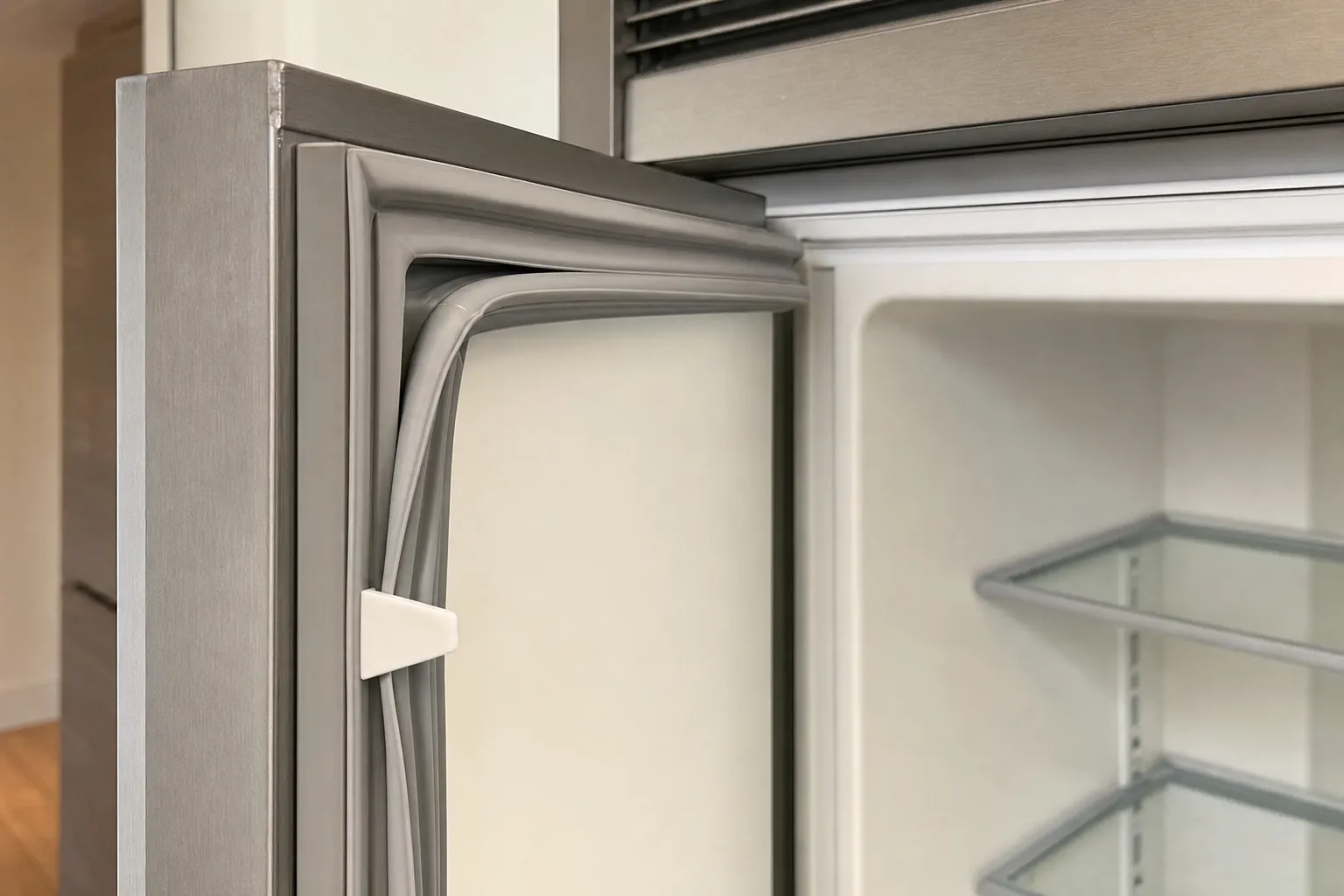
A wine cooler’s door seal does its work out of sight, and the first sign that it has stopped is seldom the rubber itself. Mercer Island works the seal harder than most places: kitchens that face the afternoon sun across the lake put light and warmth on the door, bars by the water see it opened all evening, and the air that gets past any gap is damp.
What the seal is doing
The gasket is the flexible strip around the edge of the door that presses against the face of the cabinet when the door closes. On a glass door it has two jobs: keeping the cold in, and keeping the room’s air, with its warmth and moisture, out. It manages both only if it meets the cabinet evenly the whole way round. A seal that is sound everywhere except one corner is, in practice, a door left slightly open at that corner.
How it fails
It hardens. Rubber-like seals stiffen with age, with heat and with harsh cleaning products. A hardened seal no longer shapes itself to the cabinet face; it looks glossy and feels stiff under a fingertip.
It flattens. Pressed in the same place for years, a section takes a set and stops springing back when the door opens. It still looks whole, which is why flattening is the one owners tend to miss.
It tears. Splits usually start at the corners, where the seal folds, or where a hand or a bottle base catches it during loading.
It lifts. A corner or a short run pulls away from the door and stands off the cabinet face, leaving a gap you can sometimes see in low light.
Sub-Zero’s troubleshooting treats a gasket with rips or tears as a service matter rather than an owner fix. What the part is, and why it wears where it does on the island, is covered on the glass-door gasket page.
What the zones do about it
Warm, damp room air comes in at the gap, and the zone nearest it takes the load. Sub-Zero builds its wine storage with an evaporator for each zone, so a leak shows first in the zone it belongs to: that zone runs longer, mist forms on the inside of the glass near the leak, frost can build on that zone’s coil, and the bottles closest to the door feel less cold than the rest.
A slow leak does not always show on the display straight away. The unit covers for it by running longer, until on a warm afternoon it can no longer keep up. That is why a failing seal is often reported as a zone that has drifted, and why the Holding the Zones notes on temperature and this one on seals keep meeting in the middle.
When the door, not the seal, is the problem
A door that has dropped even slightly presses the seal hard at one corner and lifts it off at the opposite one. The paper test shows the pattern clearly: firm grip at one corner, none at the corner diagonally across. Fitting new rubber to that door gives you a new seal with the same gap. The hang of the door has to be put right first, and that is part of our visit rather than a screwdriver job for the owner.
On the visit we run the same grip test the checklist below describes, look at the door’s hang and at anything inside that could hold it open, and probe the zone nearest the leak against its display. If the seal does need replacing, it is booked as wine storage repair and matched to your model and serial before it is ordered.
Before you call
-
Step 1
Look along the whole seal in good light
Use eyes and fingertips on all four sides. Look for splits, tears at the corners, stiff shiny stretches, and sections that have gone flat against the door.
-
Step 2
Test the grip with a strip of paper
Close the door on a strip of paper at a dozen points around the edge and pull it out gently each time. It should drag. Where it slides out freely, the seal is not touching.
-
Step 3
Compare opposite corners
If the paper is gripped hard at one corner and slides free at the corner diagonally across, the door has probably dropped, and the seal is not the first thing to fix.
-
Step 4
Wash the seal and dry it
Use the mild soap, water and baking soda mix Sub-Zero gives for interior surfaces, then dry it. Grime on the seal face can stop it meeting the cabinet evenly.
Past these checks the fault is inside the machine. Call Mercer Island Sub-Zero Service on (206) 208-3377 and say which step changed nothing.
Asked about this
Can I fit a new gasket to a wine unit myself?
Sub-Zero's own advice for a gasket with rips or tears is to contact service rather than to fit one yourself. There is a practical reason as well: the replacement must match the model and seat evenly all the way round, and it cannot correct a door that has dropped. Mercer Island Sub-Zero Service, (206) 208-3377, checks the hang of the door first.
How can I tell a worn gasket from a door that has dropped?
Test the grip with a strip of paper at several points around the door. Gaps scattered wherever the rubber looks flat, hard or split point to the seal. A clean pattern of tight at one corner and loose at the corner diagonally opposite points to a door hanging out of square, which fresh rubber will not cure.
Why does only one zone seem affected by a leaking seal?
Sub-Zero wine storage has a separate evaporator for each zone, so a leak shows first in the zone nearest the gap. That zone runs longer, mists on the inside of the glass and may frost on its coil, while the other zone carries on normally. It can pass for a zone that has simply drifted, which is why we test the seal early.